


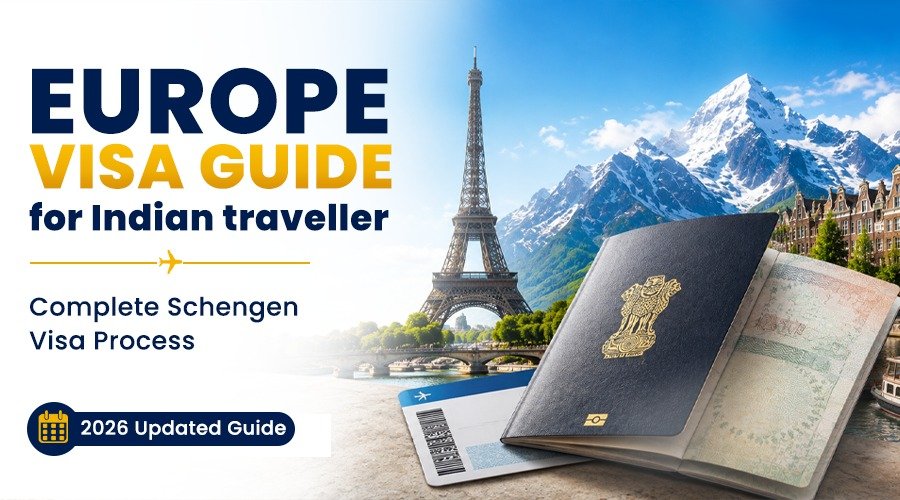
Planning a holiday to Europe is exciting. From walking through the romantic streets of Paris to exploring the snow-covered mountains of Switzerland and cruising along Amsterdam’s beautiful canals, Europe offers something for every traveller. But before you start packing your bags, there is one important thing you need to take care of—your visa.
If you are travelling from India, understanding the Europe visa process can save you time, money, and unnecessary stress. This Europe Visa Guide for Indians explains everything in simple language, from visa types and required documents to application steps, fees, and useful travel tips. Whether you are travelling with family, friends, or on your honeymoon, this guide will help you prepare with confidence.
If you are also looking for well-planned Europe Tour Packages, knowing the visa process beforehand will make your journey much smoother.
What is a Europe Visa?
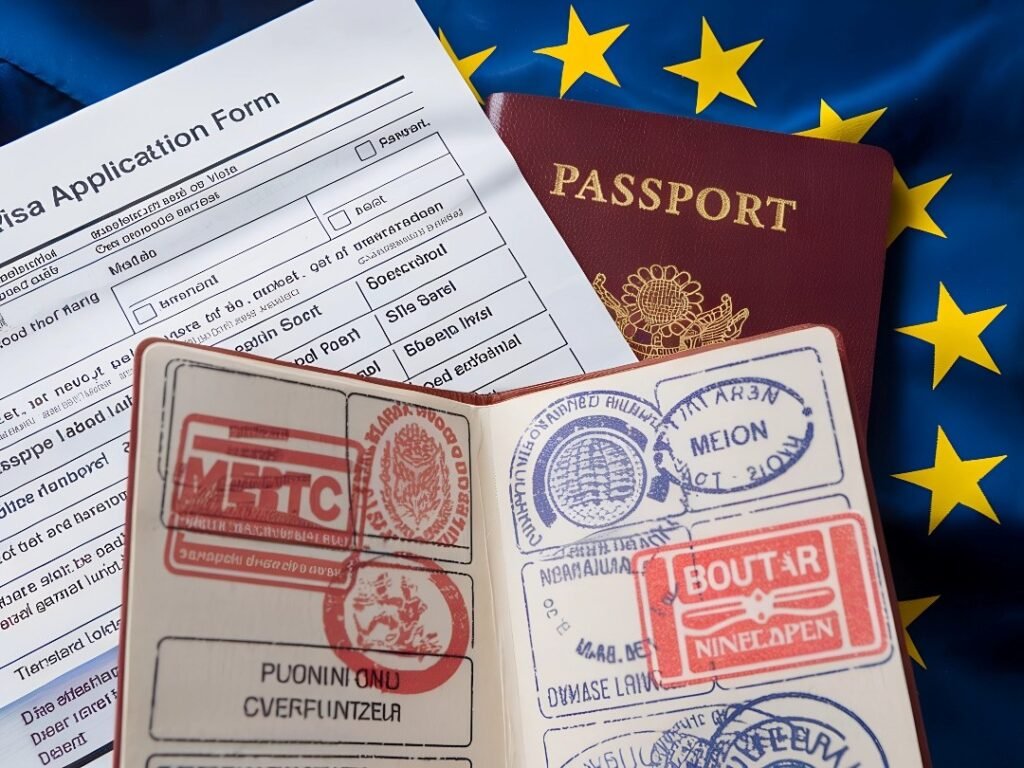
With a Europe visa, Indian passport holders have access to many countries within Europe with just one visa. It is most common to get a Schengen visa since this allows you to move freely from one country to another without having to apply for individual visas for every place that you wish to visit.
The idea is to arrive in one country and then proceed to visit several other countries with just the one visa, provided all countries visited belong to the Schengen region.
Examples of these countries include:
- France
- Switzerland
- Italy
- Germany
- Spain
- Netherlands
- Austria
- Belgium
- Czech Republic
- Greece
Do Indians Need a Visa for Europe?
Yes, Indians do require a visa for travel to European countries in general.
In case your vacation destinations include those countries which fall under the Schengen Area, you require a Schengen tourist visa. Nevertheless, the visa regulations are different for countries like the United Kingdom and Ireland. Make sure to find out the visa requirements for all the countries that you will be visiting on your trip.
Types of Europe Visas
Based on your reason for traveling, there are different visas that may be applied for.
Tourist Visa
Best for holiday travel, sightseeing, family visits, and honeymoon travel.
Business Visa
Issued for participation in meetings, conventions, exhibitions, and other business affairs.
Student Visa
Required for educational purposes and joining universities.
Work Visa
Required when intending to work in any European nation. The majority of Indian travelers opting for Europe Tour Packages will apply for a tourist visa.
What is a Schengen Visa?
A Schengen Visa is one of the biggest advantages of travelling in Europe.
Instead of applying for visas separately for France, Switzerland, Italy, and Germany, one Schengen Visa lets you visit multiple participating countries during your trip. Generally, tourist visas are issued for short stays of up to 90 days within a 180-day period.
Which Embassy Should You Apply Through?
Many travellers get confused about this.
The rule is simple.
Apply through:
The country where you will stay the longest. If your stay is equal in multiple countries, apply through the country where you will first enter the Schengen Area
For example:
If you spend:
5 days in Switzerland 3 days in France
2 days in Italy
You should apply through the Swiss embassy or visa center
Documents Required for Europe Visa
One of the most important parts of this Europe Visa Guide is preparing your documents correctly.
You generally need:
- Valid passport with at least six months validity
- Completed visa application form
- Passport-size photographs
- Flight reservation
- Hotel booking confirmation
- Day-wise travel itinerary
- Travel insurance
- Bank statements of the last six months
- Income Tax Returns (if applicable)
- Salary slips or business proof
- Employment letter or leave approval
- PAN card copy
- Aadhaar card copy (where required)
Depending on your situation, additional documents may be requested.
Keeping your paperwork organised improves your chances of a smooth visa process.entre.
Europe Visa Application Process
The application process is easier than many people expect.
Step 1: Plan Your Trip
Decide which countries you want to visit and prepare your travel itinerary.
Step 2: Collect Documents
Gather all the required documents carefully.
Step 3: Book a Visa Appointment
Schedule an appointment at the authorised visa application centre.
Step 4: Visit the Visa Centre
Submit your documents and provide biometric information, including fingerprints and photographs.
Step 5: Pay the Visa Fee
Pay the required visa fee and service charges.
Step 6: Track Your Application
Most visa centres allow you to track your application online.
Step 7: Receive Your Passport
Once approved, your passport will be returned with the visa sticker.
Europe Visa Processing Time
Processing usually takes around 15 working days after your biometric appointment.
However, during peak travel seasons like April, May, June, September, and December, processing may take longer.
It is always recommended to apply at least 30 to 60 days before your departure.
Avoid waiting until the last moment.
Europe Visa Fees
Visa fees may change over time depending on embassy regulations.
Apart from the visa fee, you may also need to pay:
- Service charges
- Biometric charges
- Courier fees (if applicable)
Check the latest fees before submitting your application.
Is Travel Insurance Mandatory?
Yes.
Travel insurance is mandatory for most Schengen visa applications.
It should cover:
- Medical emergencies
- Hospitalisation
- Emergency evacuation
- Accidental expenses
A good travel insurance policy protects you financially while travelling abroad.
Bank Balance Required for Europe Visa
There is no fixed amount mentioned for every applicant.
However, your bank account should show that you have enough funds to cover:
- Flights
- Hotels
- Food
- Local transport
- Shopping
- Emergency expenses
A healthy financial record increases confidence in your application.
Common Reasons for Europe Visa Rejection
Although many applications are approved, some are rejected because of avoidable mistakes.
Common reasons include:
- Incomplete documents
- Incorrect information
- Insufficient financial proof
- Weak travel history
- Invalid travel insurance
- Unclear travel plans
- Suspicious or fake documents
Double-check every document before submission.
Tips to Increase Visa Approval Chances
Here are some practical tips:
- Submit genuine documents only.
- Maintain sufficient bank balance.
- Show a clear travel itinerary.
- Book confirmed accommodation.
- Apply well before your travel date.
- Purchase valid travel insurance.
- Ensure your passport has enough blank pages.
Being honest and organised always helps.
Can You Visit Multiple Countries?

Yes.
One of the biggest advantages of a Schengen Visa is that you can travel between participating countries without repeated immigration checks.
Many travellers combine destinations like:
- France
- Switzerland
- Italy
- Germany
- Netherlands
- Austria
This is why Europe Tour Packages are so popular among Indian travellers.
Best Time to Visit Europe
The ideal time depends on your travel style.
Spring (March to May)
Beautiful flowers, pleasant weather, and fewer crowds.
Summer (June to August)
Perfect for sightseeing and outdoor activities, although it is the busiest season.
Autumn (September to November)
Comfortable temperatures and colourful landscapes.
Winter (December to February) Best for Christmas markets, snowfall, skiing, and winter holidays.
Why Choose Europe Tour Packages?
Planning a Europe trip independently can be overwhelming, especially for first-time travellers.
Choosing professionally designed Europe Tour Packages offers several benefits:
- Carefully planned itineraries
- Hotel bookings
- Airport transfers
- Guided sightseeing
- Comfortable transportation
- Assistance with visa documentation
- Local tour support
This saves time and makes the journey more enjoyable.
Helpful Travel Tips for Indian Travellers
Before leaving India, keep these simple tips in mind:
- Carry both printed and digital copies of your documents.
- Keep some local currency for small purchases.
- Inform your bank about your international travel.
- Pack clothing according to the season.
- Carry universal power adapters.
- Respect local customs and public rules.
- Keep emergency contact numbers handy.
A little preparation can make your trip much more comfortable.
Final Thoughts
Planning your dream European holiday starts with understanding the visa process. While applying may seem complicated at first, it becomes much easier when you prepare the right documents, follow the correct steps, and apply on time.
This Europe Visa Guide for Indians covers the essential information every traveller should know before applying. Whether you dream of seeing the Eiffel Tower, cruising through Amsterdam, exploring the Swiss Alps, or enjoying Italy’s rich culture, proper planning will help you enjoy a hassle-free journey.
If you are looking for convenient and well-organised Europe Tour Packages, choose an itinerary that matches your budget, travel style, and interests. Many travel companies also provide guidance with visa documentation, making the entire process simpler for first-time travellers.
With the right preparation, your European adventure can begin smoothly, leaving you free to create unforgettable memories across one of the world’s most beautiful continents.
Frequently Asked Questions-Europe Visa Guide for Indians
1. What is a Europe Visa?
A Europe Visa allows Indian citizens to travel to eligible European countries for tourism, business, study, or other approved purposes.
2. Do Indians need a visa to visit Europe?
Yes. Indian passport holders need a valid visa to visit most European countries, including a Schengen Visa for many popular destinations.
3. What is a Schengen Visa?
A Schengen Visa lets you travel to multiple Schengen countries with a single visa for up to 90 days within a 180-day period.
4. Which European countries can I visit with a Schengen Visa?
You can visit countries like France, Switzerland, Italy, Germany, Spain, the Netherlands, Austria, Belgium, and more with one Schengen Visa.
5. How long does it take to get a Europe Visa?
Europe Visa processing usually takes around 15 working days, but it may take longer during peak travel seasons.
6. What documents are required for a Europe Visa?
You’ll typically need a valid passport, visa application form, photos, travel insurance, flight and hotel bookings, bank statements, and proof of income.
7. How much bank balance is required for a Europe Visa?
There is no fixed amount, but you should show enough funds to cover your travel, accommodation, daily expenses, and return journey.
8. Is travel insurance mandatory for a Europe Visa?
Yes. Travel insurance is mandatory for most Schengen Visa applications and should cover medical emergencies during your trip.
9. Can I visit multiple countries with one Europe Visa?
Yes. A valid Schengen Visa allows you to travel between multiple participating countries without applying for separate visas.
10. When should I apply for a Europe Visa?
It is best to apply at least 30 to 60 days before your travel date to allow enough time for processing.
11. Can a Europe Visa be rejected?
Yes. Applications may be rejected due to incomplete documents, insufficient funds, incorrect information, or unclear travel plans.
12. Do Europe Tour Packages include visa assistance?
Many Europe Tour Packages include guidance with visa documentation and the application process, making travel planning easier for Indian travellers.

LPO Holidays is India’s leading travel company specializing in international group tours and custom-designed travel experiences. With over a decade of industry expertise, our passionate team has successfully curated unforgettable journeys to Europe, Japan & Korea, Vietnam, Turkey, Dubai, and beyond for more than 30,000 happy travelers from across 350+ Indian cities.
At LPO Holidays, we’re committed to fulfilling every Indian’s travel dreams by crafting immersive, comfortable, and memorable travel experiences. Our dedicated travel experts leverage their deep knowledge of global destinations, ensuring every tour is meticulously planned and beautifully executed.
When we’re not crafting the next dream itinerary, you can find our team exploring new destinations, seeking hidden gems, and sharing travel insights on our blog to inspire your next great adventure.